Making the past visible: The editathon “Colonial traces along the river Spree”
The Berlin Seminar for Oriental Languages (SOS) was an educational institution with a colonial mandate that operated between 1887 and 1942 to provide language and cultural training for diplomats, military officers, and missionaries, as well as businesspeople and entrepreneurs. Affiliated with the former Friedrich Wilhelm University of Berlin, the SOS employed not only German linguists and librarians but also lecturers, who typically came from European colonies of the time and taught languages such as Swahili, Arabic, and Turkish. While studies have primarily focused on the history of the seminar and its directors, the non-German lecturers have rarely been the subject of research so far. As part of a digiS-funded project to digitize the SOS archives, the Stabi Lab of the Staatsbibliothek zu Berlin and the Geheime Staatsarchiv (GStA) hosted the editathon “Colonial traces along the river Spree” to examine the lecturers’ biographies, fill gaps in the data services of the Gemeinsame Normdatei and WikiData, and thereby give the lecturers greater visibility.
From archival record to digitized image
The SOS archive collection is in high demand and is extensively used by researchers at the Geheime Staatsarchiv. It consists of 488 archival units spanning approximately 12 linear meters. To best protect this unique collection while also simplifying access to it, the Geheime Staatsarchiv submitted a grant application to digiS, the Research and Competence Center for Digitization Berlin. Thanks to the funds gratefully received, the GStA was able to first have the collection cleaned and undergo conservation treatment. Originally, subsequent digitization was planned to take place at the archive. However, market research revealed that it was much more cost-effective to outsource the digitization to an external service provider. Therefore, parallel to the conservation work on the collection, the GStA issued a call for bids for the digitization. In late summer, the 12 linear meters were handed over to the service provider. The digitization took place in the fall and winter of 2025. The result was approximately 70,000 scans. The GStA’s digitization workshop conducted quality assurance and is now importing the digitized materials into ACTApro, our archival information system. Participants in the editathon “Colonial traces along the river Spree” received digitized materials in advance.
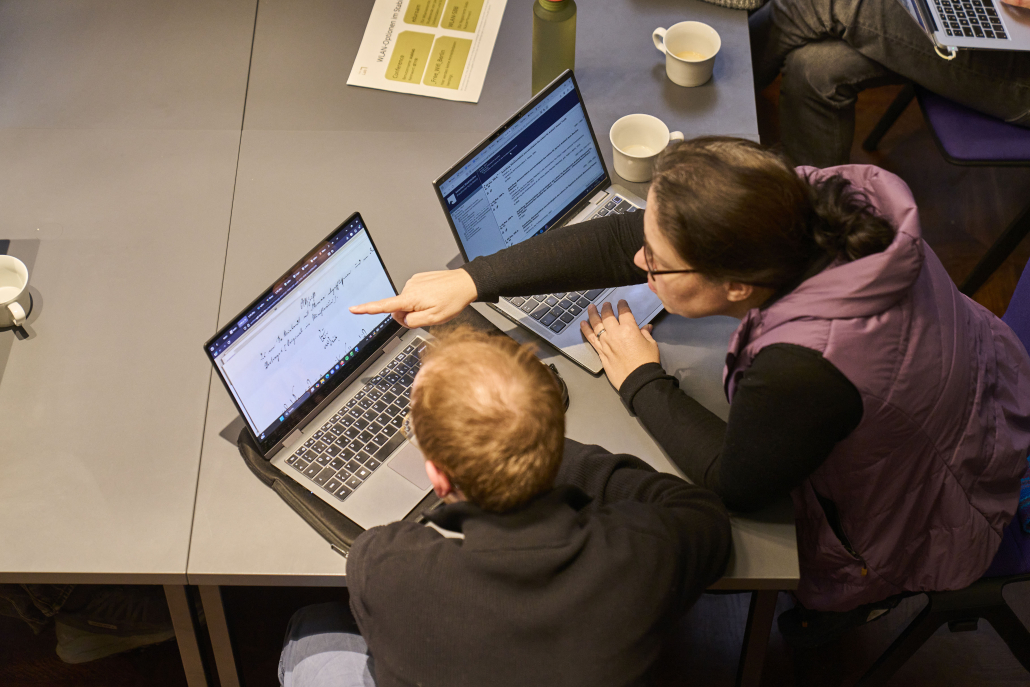
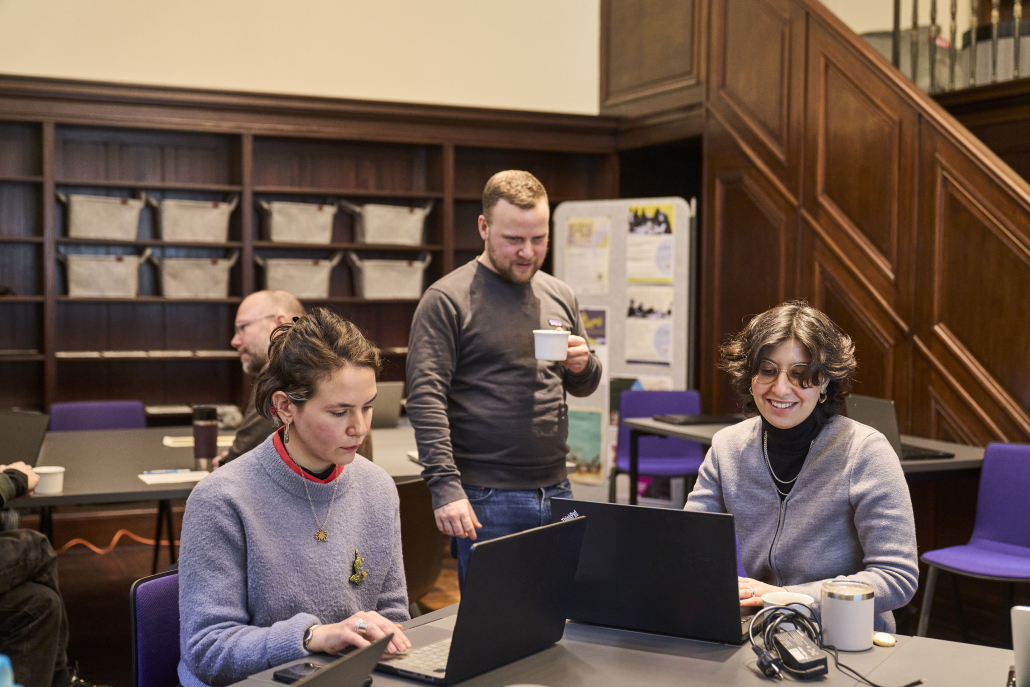
© Stabi Berlin, Foto: Marcus Glahn Fotografie
Making history visible collaboratively
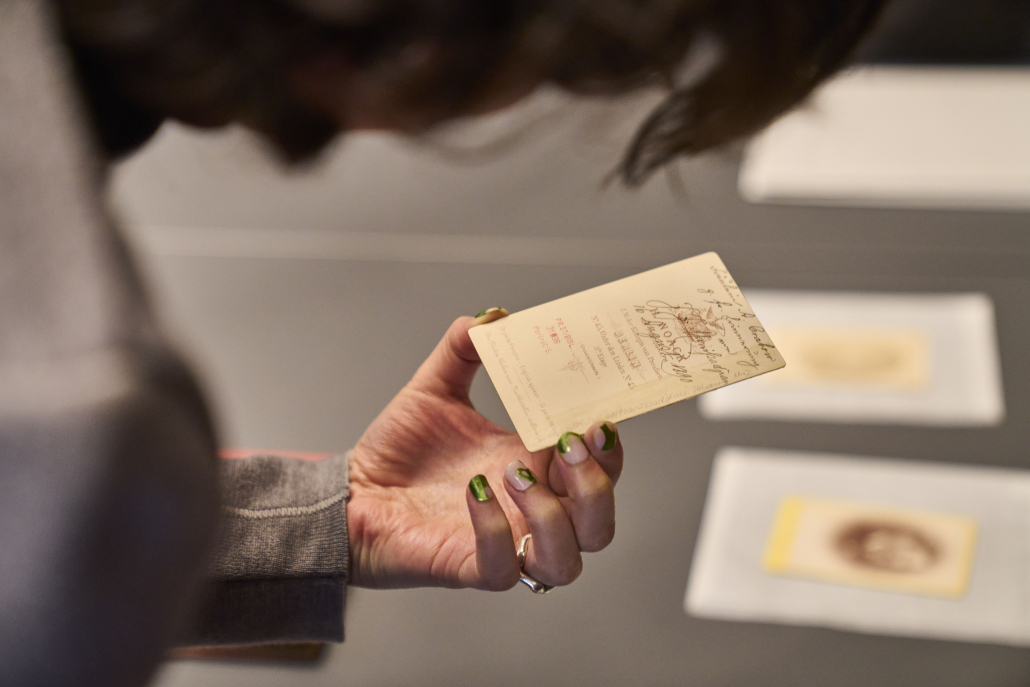
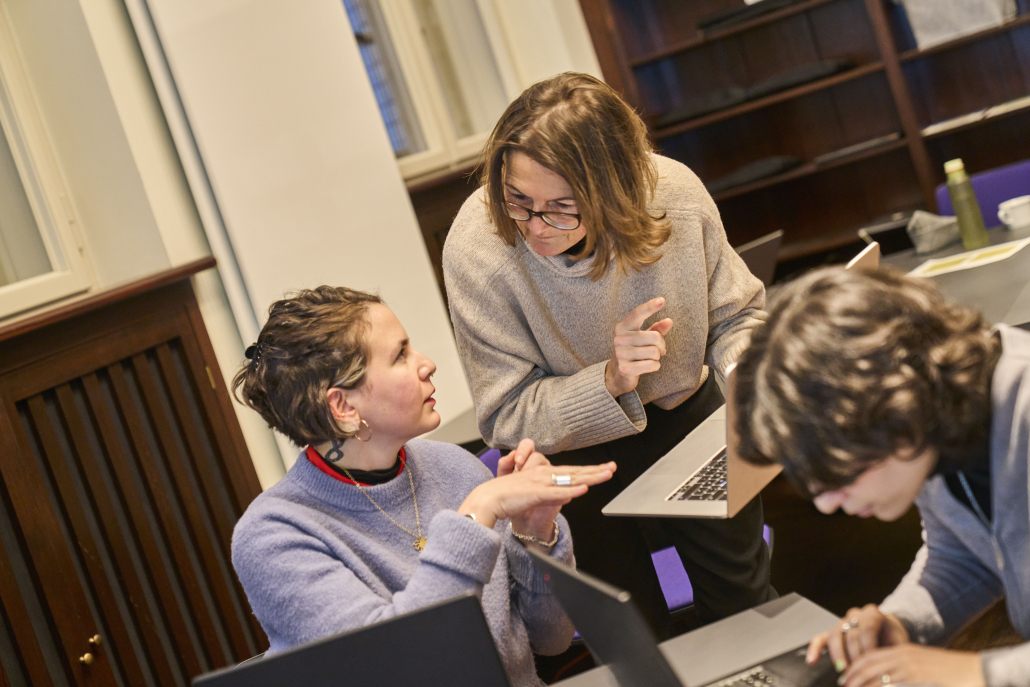
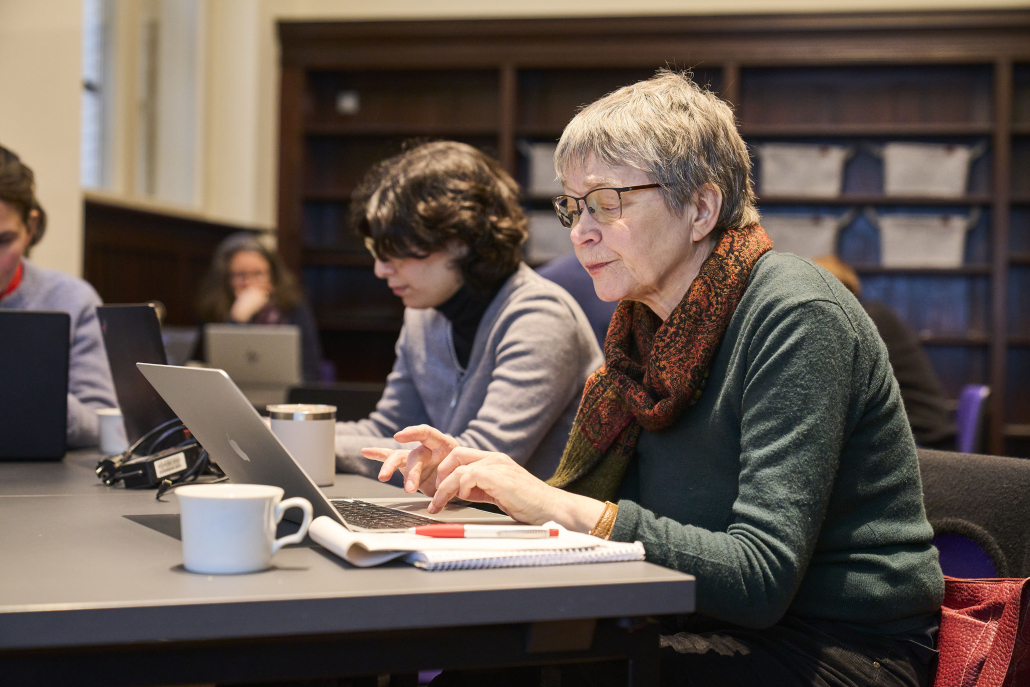
From January 29 to February 19, 2026, the editathon took place at the Stabi Lab of the Staatsbibliothek zu Berlin and at the Geheime Staatsarchiv. Working in groups on-site and during individual research sessions, participants explored the records of the seminar on the histories of non-German lecturers, which had recently been digitized by the Geheime Staatsarchiv. In doing so, they consulted both digitized files and physical archival materials from the seminar and gained fascinating insight into working with archival material. The information gathered is now being processed and added as new entries or expansions to existing entries in the Gemeinsame Normdatei (GND) and WikiData.
The history of SOS and the role of the lecturers were contextualized by researchers and information specialists. Prof. Dr. Nazan Maksudyan (Centre Marc Bloch/Freie Universität Berlin) introduced the history of the SOS using the example of the Turkish lecturer Johannes Jacob Manissadjian, while Moritz Strickert (FID Social and Cultural Anthropology/Network Colonial Contexts) discussed the role of data standards, particularly with regard to terms from colonial contexts. In her presentation at the closing event of the editathon, Dr. Heike Liebau from the Leibniz Center for Modern Oriental Studies explored the significance of approaches based on the history of interconnections, the role of actor networks, and the influence of digital methods on research and information infrastructures.
Results
In total, approximately 30 non-German lecturers at the seminar were identified who had no entries or only incomplete entries in the Gemeinsame Normdatei and WikiData. Using AI-supported tools, over 100 additional individuals who worked at the seminar between 1887 and 1942 were also identified. Close examination of the seminar’s records also brought to light the experiences of individual non-German lecturers, which were often shaped by racist ideologies and colonial practices. By merging existing entries, the participants made the lecturers’ longer biographical trajectories visible and contextualized their work in Berlin during the imperial era.
The editathon “Colonial traces along the river Spree” has made by far the largest contribution to enriching data on the Seminar for Oriental Languages since the WikiData platform was founded in 2014. The contribution to the Gemeinsame Normdatei also represents a significant expansion of existing entries. This linking of knowledge now enables new avenues for research and the reuse of open cultural data. However, it is only a first step in the development of new research on the history of German colonialism.
Contact
You would like learn more about researching collections data and the records of the Seminar for Oriental Languages? Feel free to get in touch:
john.woitkowitz@sbb.spk-berlin.de
Dr. Ramon Voges is Executive Assistant to the Director at the Geheime Staatsarchiv Preußischer Kulturbesitz (GStA)
ramon.voges@gsta.spk-berlin.de
 @ Stabi Berlin
 bpk / Kunstbibliothek, SMB, Photothek Willy Römer / Willy Römer